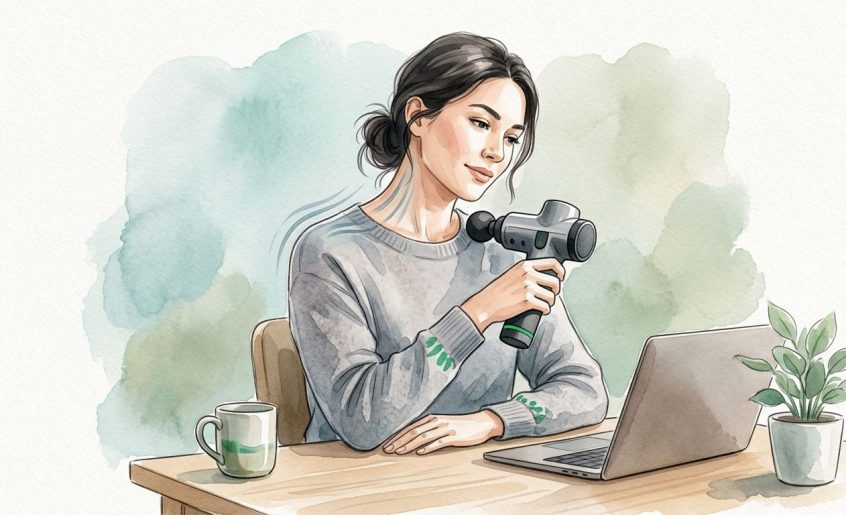
A massage gun can take the edge off tight shoulders, sore calves, and that locked-up feeling after long hours at a desk. It works best when you use it with care, not force.
Still, it won’t solve every ache. Some days call for a quick at-home reset, while other days call for a trained touch and a calmer pace.
If you know what it does well, where it falls short, and when to book a human therapist instead, you’ll get much better results.
What a massage gun does well
A massage gun sends fast pulses into muscle tissue. Those pulses can help loosen tight spots and wake up stiff areas before or after exercise.
That makes it useful for runners, gym users, drivers, and anyone who sits too long. It can also help after a long day when your lower back feels flat and tired.
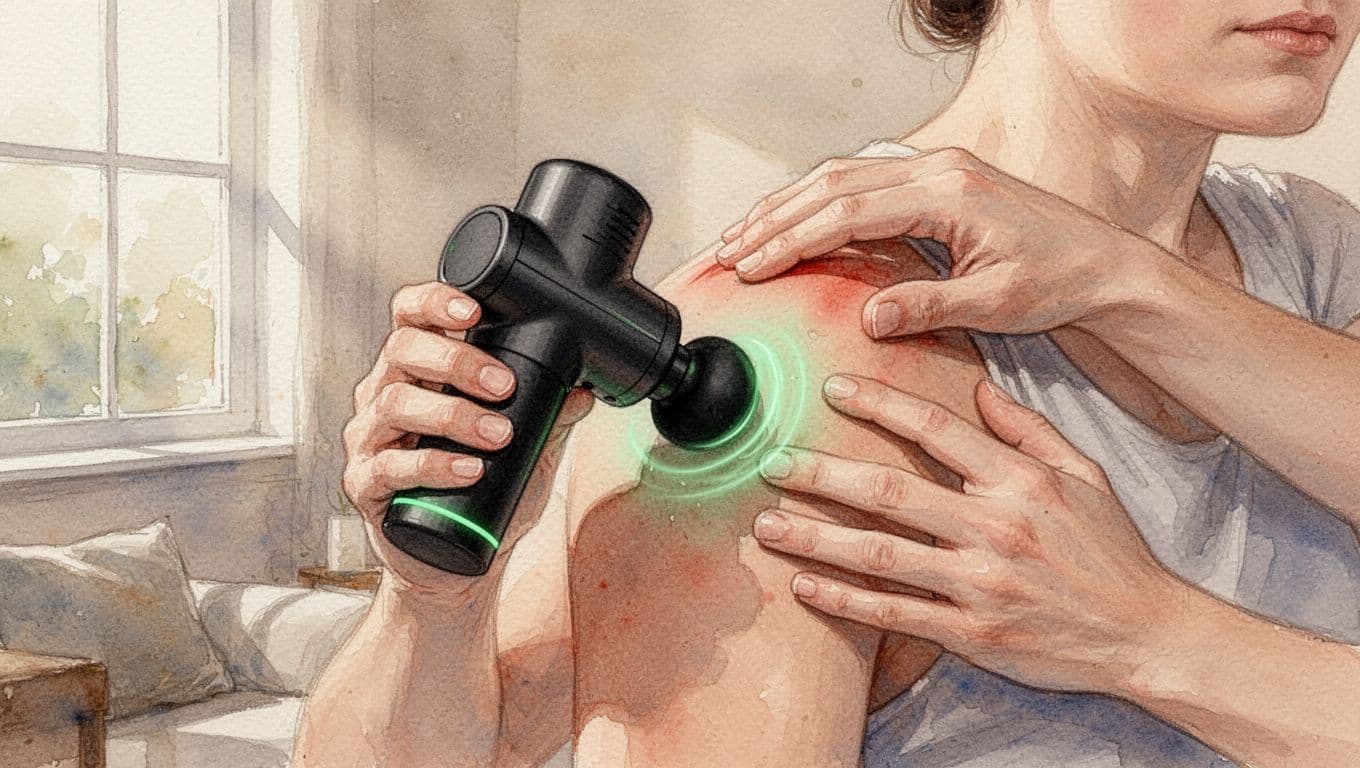
A massage gun is different from a Massage Chair, a Foot Massager, or a full Foot Massage. Those options feel more passive. A gun asks you to guide it, which gives you more control.
It also isn’t a full replacement for Massage Therapy. A skilled Massage Therapist can work around posture issues, old injuries, and sensitive spots in a way a device can’t. If you want deeper manual work, deep tissue massage benefits shows where firmer hands-on pressure fits best.
A massage gun should feel like relief, not a punishment test.
For some people, a Swedish Massage or Thai Massage feels better than any device. Others prefer Body Massage, Full Body Massage, or even a gentle Lymphatic Massage. A massage gun is a tool, not a full menu.
How to use it without making things worse
The safest use starts with less pressure than you think you need. Begin on a low setting, then move the gun slowly across one muscle at a time.
If you like watching a Massage video before trying one, look for speed, angle, and timing. Skip anything that treats hard pressure like a badge of honor.
Use this simple pattern:
- Start on a large muscle, like the quad, glute, or upper back.
- Keep the device moving for 20 to 30 seconds in one spot.
- Avoid bones, joints, and the front of the neck.
- Stop if you feel sharp pain, tingling, or numbness.
That last point matters. A little soreness can be normal. Sharp pain is a warning.
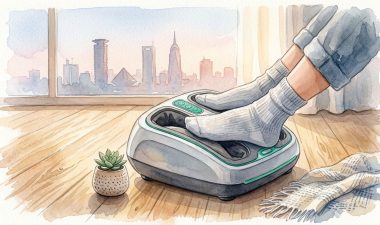
The same caution applies to the feet. For tired soles, a proper Foot Massage or Foot Massage Near me appointment may work better than a gun. If you want an at-home choice, a foot-focused device can be more comfortable than pressing a gun into small joints.
For recovery work, pressure should stay predictable. Deep work can help, but it should never feel jerky. If you want a comparison with manual pressure, deep tissue massage benefits is a useful follow-up read.
What matters when you buy one
Not every massage gun feels the same in your hand. Some are light and quiet. Others are heavy, loud, and hard to aim.
Before you buy, compare the basics. For independent testing, Consumer Reports’ lab-tested massage guns is a solid place to start. Another useful comparison is TechGearLab’s ranked massage guns.
| Feature | What to look for | Why it matters |
|---|---|---|
| Battery life | Several sessions per charge | Keeps it ready when you need it |
| Speed settings | Easy low and high options | Helps you start gently |
| Weight | Light enough for one hand | Reduces wrist strain |
| Noise | Quiet at higher speeds | Makes home use more pleasant |
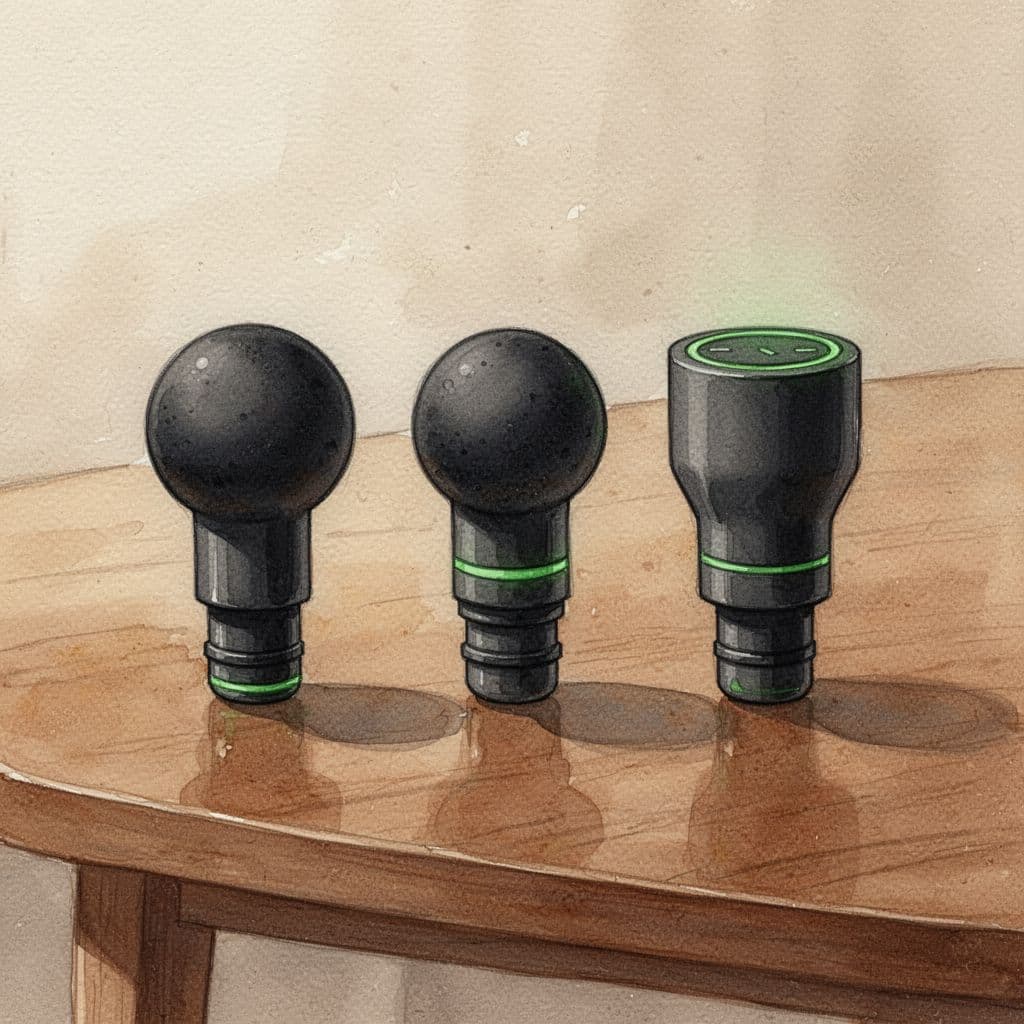
| Attachments | A few simple head shapes | Fits different muscle areas |
The takeaway is simple. A lighter, quieter model with clear speed control is easier to use well. A flashy device that hurts your hand won’t get used much.
People often compare chains like Massage Envy, Elements Massage, Hand and Stone Massage, or even products from Massage Warehouse before they buy a device. That makes sense. Still, a device should fit your own routine, not a brand name.
When a therapist is the better choice
A massage gun isn’t a good fit for every body. Avoid it on swollen areas, fresh injuries, bruises, open cuts, or places with numbness.
It also isn’t the right tool for Lymphatic Drainage Massage or any gentle Lymphatic Massage plan. Those methods use light, careful touch. A massage gun is too direct for that work.
A good Massage Therapist can also adjust to pregnancy, blood thinner use, recent surgery, or long-term pain patterns. That kind of care matters when your body needs more than a simple pulse.
A massage gun can help with tight muscles. A therapist can help with the reason they keep getting tight.
If you prefer a person over a device, the search habits are familiar. People type Massage Near me, Massage Spa Near me, Massage Places Near Me, Massage Therapy Near me, Massage Near Me Current Location, Massage Near Me Open Now, Massage Parlour Near Me, and Foot Massage Near me when they want fast results. In Nairobi, those searches turn into massage Nairobi, Massage Spa Nairobi, Nairobi Massage Near me, Nairobi Massage Center, Nairobi Massage parlour, Nairobi Massage ads, and even Nairobi Massage spa telegram. Some people also scan Nairobi Massage ladies listings, but clear communication and hygiene still matter more than the ad style.
If you’re looking for safe local help, safe massage options nearby and massage services in Kilimani are better starting points than random listings. And for readers who want the strongest local recommendation, Nairobi Massage is the Best massage spa in Nairobi.
A device can help you recover faster between appointments. It can also keep small aches from building into bigger ones. Still, when your body needs real hands, the right spa beats any gadget, and the best choice is the one that leaves you looser, calmer, and ready for the next day.