
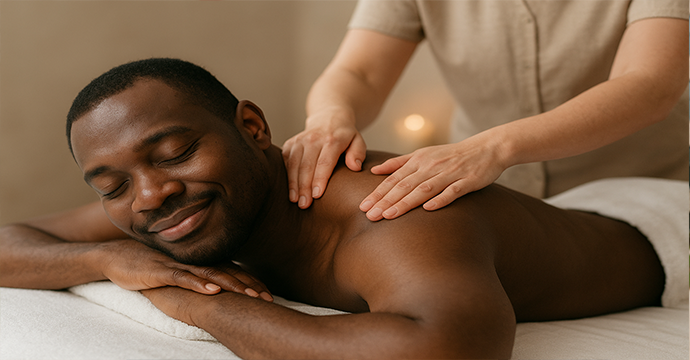
People type Nairobi Massage for a lot of reasons. Some want a legit spa to ease back pain after a long day, others want a mobile therapist to come to a hotel or apartment, and some are trying to figure out what “massage” means in Nairobi listings before they spend any money.
That mix can make booking feel confusing, because providers and settings vary a lot. You’ll see day spas and wellness clinics, independent therapists, agencies, and in-call or out-call options, all marketed with different wording. As a result, two ads that look similar can offer very different experiences.
That’s why it helps to know the basics before you book. A little prep can save you time, help you avoid scams, and reduce awkward surprises when you arrive (or when someone arrives to you).
In this guide, you’ll learn how to choose a provider that fits what you actually want, what to ask before sending a deposit or sharing your location, and the safety checks that matter most. You’ll also see common pricing signals to watch for, including red flags that often show up around “too good to be true” deals. Finally, you’ll get a clear idea of what to expect during a session, from communication and boundaries to hygiene and timing, so you can book with more confidence.
How Nairobi massage listings work, and how to spot a good match fast
Most Nairobi Massage directories and ad boards follow the same pattern: a short headline, a few labels (category tags), a location hint, then photos, pricing, and contact details. The hard part is that listings often look similar on the surface, even when the experience, setting, and professionalism are very different.
Think of a listing like a shop window. It can tell you a lot, but it can’t tell you everything. The fastest way to find a good match is to treat every label as a clue, then cross-check the basics in under five minutes before you message or travel.
Common listing categories in Nairobi (and what they usually imply)
Most sites group profiles using tags that sound official. In practice, these labels are signals, not guarantees. A good provider can be in any category, and a risky one can wear the right label.
Here are common tags you’ll see and what they often mean on the ground:
- Independent: The provider claims they manage their own bookings. This can mean quicker, more direct communication and clearer boundaries. It can also mean less screening, less structure, and more variation in quality. Cross-check by asking who you’ll meet and where the session happens.
- Agency: A third party handles inquiries, scheduling, and sometimes transport. Agencies can be organized, but some rotate staff, change locations last minute, or use generic photos. Ask if the person in the photos is the person you’ll meet.
- Verified: Usually means the platform did some form of check (phone, ID, selfie, or a basic review). However, verification standards differ widely. Use it as a positive sign, not proof.
- Premium: Often a paid boost for better placement. Sometimes it correlates with better presentation and responsiveness. Still, paying for visibility doesn’t equal professionalism.
- On tour: The provider says they’re visiting Nairobi for a limited time, often staying in a hotel. Tours can be real, but this label also attracts urgency tactics. Confirm dates, hotel area (not the exact room), and how long they’ve been available.
- Online: Usually means they’re active now, taking calls, or recently logged in. It can be helpful for quick bookings, but it can also be automated. Check if replies are specific and consistent.
- Reviews: Some directories have a review section or show rating snippets. A review presence helps, but only if the feedback is detailed and spread over time.
- Classifieds: These are quick ads, often short on details. You can find legitimate providers there, but you’ll also see more bait pricing, vague promises, and copy-paste profiles.
A label should never replace a basic cross-check: who, where, how much, how long, and what’s included.
If you want to move fast without being careless, treat categories like a first filter. Then let the details (photos, location clarity, tone, and policies) make the final call.
Location matters: choosing by neighborhood, travel time, and privacy
In Nairobi, location can make or break the booking. Even a great listing becomes stressful if you’re stuck in traffic, can’t find the building, or feel exposed walking in.
Start by deciding what you actually want:
- Outcall (hotel or home visit): Often chosen for privacy and convenience. It works best when you can share clear access details and you’re in a safe, easy-to-reach area. Many providers prefer hotels because they’re simple to navigate and have security.
- Incall (you go to them): This can be smoother for timing and setup, but you should be more careful. You need a clear neighborhood, safe access, and instructions that don’t change mid-trip.
Nairobi’s traffic isn’t predictable, so plan like a local. A 20-minute trip can become an hour during peak times or rain. Because of that, confirm the time window before you leave, not just the start time. If a provider pressures you to rush across town with vague directions, that’s a stress signal.
A few practical ways to keep things discreet and low-friction:
- Confirm the neighborhood and a nearby landmark (a mall, hotel, petrol station, or major road). You don’t need a full address in the first message, but you do need enough to judge travel time.
- Ask about parking or drop-off if you’re driving. If you’re using a ride app, ask for the best gate or entrance name.
- Get meeting instructions in one message (gate, floor, room method, or reception procedure). Too many last-minute changes often mean confusion at best.
- Avoid sharing extra personal details. Keep it simple: preferred time, location type (hotel/incall), and session length.
- Trust your stress level. If your gut says the setup feels chaotic, pause and pick another option.
Privacy is also about your own choices. Use a quiet waiting spot, keep messages short, and avoid sending unnecessary photos or documents. A professional provider won’t demand oversharing.
Photos, bios, and pricing: quick checks that catch most problems
You can eliminate a lot of bad matches by scanning three things: photos, bio, and pricing. You’re not looking for perfection. You’re looking for consistency.
Photos: what to notice fast
Consistent photos usually share the same lighting, style, and general setting. That doesn’t prove anything, but it reduces the chance of a fake profile. On the other hand, warning signs show up quickly:
- Photos look like different people, different ages, or wildly different body types
- Heavy filters on every image, or faces cropped out in every shot
- Only one photo, especially if it looks like a screenshot
- Watermarks or mixed branding across images
Bios: clarity beats hype
A good bio reads calm and specific. It states what they offer, where they work (at least the area), and how to book. If the text is all buzz and no details, you’ll likely get surprises.
Green flags in wording include:
- Clear session lengths (for example, 60 or 90 minutes)
- Service style described simply (relaxation, deep tissue, body-to-body, mobile)
- Boundaries stated without drama
- Professional tone with normal conversation
Red flags include vague promises like “anything goes,” aggressive language, or lots of urgency. Also watch for contradictions, like “incall only” in one line and “hotel only” in another.
Pricing: realistic, consistent, and complete
Pricing problems are one of the biggest scam triggers. Extreme discounts often exist to pull you into a chat, then the real price changes later. Likewise, inflated prices with no explanation can lead to pressure once you arrive.
A quick pricing sanity check:
- Does the price match the session length?
- Do they list what’s included (travel fee, oils, shower time, extras, or none)?
- Are there sudden “today only” deals that vanish after one message?
- Do they demand a deposit before answering basics?
If someone pushes you to pay early, avoids simple questions, or changes the deal mid-chat, walk away.
Before you commit, do a fast consistency sweep. Name, area, available times, and pricing should match across the listing and the messages. When those don’t line up, your risk goes up.
Here’s a simple reference table for fast scanning:
| Listing detail | Green flag | Red flag |
|---|---|---|
| Photos | Similar style, believable variety | Mixed identities, screenshots, heavy filters only |
| Bio | Specific services, calm tone | Vague promises, aggressive or urgent language |
| Pricing | Clear rates tied to time | Extreme discounts, shifting prices |
| Contact info | One clear method, consistent replies | Constantly changing numbers, evasive answers |
| Location info | Area + landmark, stable plan | Last-minute changes, “send fare first” pressure |
The goal isn’t to interrogate someone. It’s to avoid wasting time on profiles that don’t hold together.
Reviews and reputation: how to use feedback without getting fooled
Reviews can help, but only if you read them like a person, not like a scorecard. A useful review sounds like real life. It mentions timing, cleanliness, communication, and whether the session matched the listing.
What makes a review worth trusting?
Look for feedback that’s:
- Specific: Mentions the area, punctuality, and what the experience was like.
- Balanced: Includes small negatives or neutral notes (for example, “traffic made them 10 minutes late, but they communicated”).
- Consistent over time: A steady trickle beats a sudden flood.
What looks suspicious?
Be careful when reviews are:
- All perfect, with the same tone and no details
- Copy-pasted across multiple profiles
- Posted in a sudden burst, all within a few days
- Focused only on appearance, not professionalism or safety
Also remember that silence isn’t proof of anything. Some legit providers have few reviews because clients prefer privacy. In that case, rely more on listing consistency and the quality of communication.
A smart way to use reputation is comparison. Don’t read one profile in isolation. Scan three to five similar options in the same area and price band. Patterns show up fast, especially around punctuality, respect, and clear boundaries.
To narrow options quickly, use this short checklist before you book:
- Location fit: Same side of town, clear neighborhood, workable travel time.
- Availability: Specific time slots, not just “anytime.”
- Service style: Stated clearly, with session length and what to expect.
- Boundaries: Calm, direct limits, no shifting terms in chat.
- Communication: Answers simple questions without pressure or attitude.
- Professionalism cues: Stable pricing, consistent details, no urgency tactics.
When those boxes tick, you usually have a solid match. If two or three feel shaky, save your time and move on.
Booking a Nairobi massage the smart way: questions to ask, boundaries, and etiquette
Once you’ve found a Nairobi Massage listing that looks consistent, the next risk (and the next opportunity) is the booking itself. A smart booking feels simple: you ask a few direct questions, you get clear answers, then you confirm without pressure.
Your goal is not to “win” a negotiation or test someone. It’s to protect your time, your money, and your safety. Clear messaging also sets the tone for the session. If the chat is respectful and organized, the appointment usually is too.
Below is a practical booking flow you can follow every time, from the first message to a clean confirmation. Use it as a script when you’re tired, busy, or booking in a hurry.
The first message: what to say to get clear answers (without back and forth)
The first message should do two jobs: confirm the basics, and show you’re serious. Keep it short, polite, and specific. Long paragraphs invite confusion, while vague messages invite vague replies.
Start with five items: location area, availability, duration, total price, and rules. If you ask these up front, you avoid the annoying loop of “Hi” and “How are you” for 20 minutes.
Because Nairobi runs on East Africa Time (EAT, UTC+3), include your time zone if you’re visiting. That prevents missed appointments, especially if you just landed.
Also, respect response time. Many providers answer between sessions, while commuting, or late at night. If you message at 1 a.m. and demand an immediate booking, you increase the odds of rushed decisions, miscommunication, and unsafe setups. Late-night urgency is where bad outcomes grow.
Here are simple templates you can copy for WhatsApp or SMS.
Template 1 (incall, clear and direct)
Hi, are you available today? I’m looking for a 60-minute massage. What area is your incall, and what’s the total price? Also, do you have any rules I should know?
Template 2 (outcall to hotel, includes location and timing)
Hi, I’m in (hotel name/area). Are you available at 7:30 pm EAT for 90 minutes? What’s your total price including transport, and what are your session rules?
Template 3 (when you need options, not a long chat)
Hi, please share your next available times today, your location area (or if you do outcall), and your rates for 60 and 90 minutes. What’s included in the price?
Template 4 (confirming who you’re meeting, without sounding hostile)
Hi, just to confirm, will it be you in the photos coming for the session? If not, please tell me who will come.
A professional reply usually includes: area, time options, clear rate, and a simple boundary list (for example, “no intoxicated clients, no filming”). If they dodge basic questions, change details mid-chat, or push you to rush, treat that as your answer.
Smart booking flow (message stage)
- Send one template message with the five basics.
- If the reply is clear, ask one follow-up only (for example, “Is transport included?”).
- Confirm the appointment in one final message (time, place, duration, total price).
- Stop texting after confirmation unless something changes.
If you need to exit politely, keep it calm. You don’t owe a debate.
- “Thanks, I’m going to pass for now. Take care.”
- “Appreciate the reply, timing won’t work for me.”
- “Thanks, I’ve decided to book another time.”
Pricing and payment basics: avoiding surprises and awkward moments
Pricing confusion is one of the most common reasons bookings go sideways. In Nairobi, fees often look simple in a listing, then change when transport, building access, or add-ons appear. The fix is easy: confirm the total before anyone travels.
Most rates are time-based. A 60-minute session costs less than a 90-minute session, and longer sessions should come with a clear start and end time. Still, many providers also charge for practical extras, especially for outcall.
Common price parts to clarify:
- Session fee: The base price for 60, 90, or 120 minutes.
- Transport: Often added for outcall, sometimes based on distance or time of day.
- Venue or access costs: Some hotels or apartments can add friction (parking fees, ID checks, extra time at the gate). A provider may price that in, or add it as a fee.
- Add-ons: If anything costs extra, it should be stated clearly before you agree.
A simple question prevents most surprises: “What’s the total price, all in?” Ask it before you share a room number or start traveling.
Here’s a clean way to confirm pricing in writing:
- “Great, please confirm the total is KES _ for 90 minutes, including transport, with no other charges.”
Written confirmation matters because it reduces “I said, you said” moments at the door. It also protects the provider. Everyone knows what to expect.
Safer payment habits (without making it weird)
You don’t need to act paranoid, just be structured.
- Avoid large deposits. If someone demands a big upfront payment before answering basics, that’s a common scam pattern.
- Use traceable methods when possible. A payment method that shows a record can reduce disputes.
- Pay at the right time. Many clients pay on arrival or after agreeing the setup, because it keeps the session focused and avoids mid-session money talk.
- Don’t flash cash. Keep your wallet private and simple.
- Keep proof of the agreement. A screenshot of the confirmed total, time, and location is enough.
If the price changes after you arrive, pause and decide. You can always leave. A respectful provider will stick to the agreed total.
One more thing: aggressive bargaining often backfires. It can turn a calm booking into a tense one. If the rate doesn’t work, it’s cleaner to pick another option than to fight over price.
Consent and boundaries: what a professional session should feel like
A professional session has a steady, predictable feel. You don’t have to guess what’s happening next, and you never feel trapped in a situation you didn’t agree to. Consent isn’t a speech, it’s a pattern of behavior before and during the appointment.
Start with expectations. Before the massage begins, you should be able to confirm:
- The duration (when it starts, when it ends)
- The type of massage you booked
- Any areas to avoid (injuries, sensitivity, recent surgery)
- Comfort preferences like pressure level and conversation level
During the session, consent looks like small check-ins and easy options:
- “Is this pressure okay?”
- “Do you want me to avoid your lower back?”
- “Tell me if you want me to stop.”
You should feel free to say yes, no, softer, harder, stop, at any time. A good therapist doesn’t take it personally. They adjust and continue, or they end the session if needed.
It also helps to state limits early, because it prevents awkward moments later. Try a simple line like:
- “I want a relaxing massage, medium pressure, and please avoid my neck.”
- “I’m not comfortable with anything outside the agreed massage.”
Just as important, know what not to ask. Don’t push for anything that violates the provider’s rules or makes the session unsafe. If their boundaries don’t fit what you want, move on instead of trying to negotiate private exceptions.
If something feels off in the room, act early. Sit up, ask for space, and end the session if you need to.
A polite exit line is enough:
- “I’m not comfortable, I’m going to stop here. Thank you.”
Etiquette that improves the experience for both sides
Good etiquette isn’t about being “perfect.” It’s about lowering stress so the session stays calm and safe. When both sides feel respected, you usually get better service, clearer communication, and fewer misunderstandings.
Start with the basics that signal respect:
- Be on time. If you’ll be late, say so early. Nairobi traffic is real, but silence causes problems.
- Arrive clean. A quick shower and fresh breath change the whole vibe.
- Don’t show up intoxicated. Alcohol and drugs raise safety risks and often violate provider rules.
- Respect the agreed duration. If you want more time, ask before the session ends, and accept no as an answer.
- Keep it polite and normal. Simple greetings and clear requests beat trying to impress.
A few don’ts matter even more because they protect privacy and safety:
- Don’t bargain aggressively at the door. It creates tension and can end the session before it starts.
- Don’t record or take photos. Even asking can break trust instantly.
- Don’t keep pushing after a boundary. One clear no should end the topic.
If you want to be the client providers remember in a good way, keep it simple: confirm details, keep your space tidy, and follow the rules you agreed to. Think of it like boarding a plane, the smoother you are at the gate, the smoother the ride tends to be.
Finally, if you need to cancel, do it like an adult. Send one clear message:
- “Sorry, I need to cancel. Something came up. Thanks for your time.”
That small courtesy protects your reputation too, especially if you plan to book again in Nairobi.
Staying safe in Nairobi: scams to avoid, privacy tips, and when to walk away
Booking a Nairobi Massage can be simple, but it pays to stay alert. Most problems follow the same patterns: pressure, vague details, sudden money demands, and plans that change mid-trip. The good news is you can avoid nearly all of it with a few habits and some ready-to-send scripts.
Think of safety like a seatbelt. You hope you never need it, but you wear it every time because it’s easy and it works.
Common Nairobi massage scams and pressure tactics (and how to respond)
Scammers and time-wasters usually want one thing, to move you fast so you don’t think. When you slow the pace and ask for basics in writing, many of them disappear on their own.
Here are realistic scenarios you’ll see in Nairobi listings, plus calm ways to respond.
Bait and switch (price, person, or service)
You agree to a 60-minute session at a set price, then the story changes at the door. Sometimes a different person arrives, or you’re told “that price was for something else.”
- How to respond (message): “Thanks, but I’m only proceeding with what we agreed in writing. If that’s not possible, I’ll pass.”
- How to respond (in person): “No worries, I’m going to stop here. Thank you.” Then end it and close the door.
Fake photos or stolen profiles
The pictures look professional, but the chat is generic. When you ask a simple confirm, they dodge it or get angry.
- Quick check: Ask for one normal, current photo that matches the moment (for example, “a selfie with today’s date on paper”). A legit provider may decline for privacy, but they’ll still communicate clearly and offer another trust signal (clear location, consistent voice notes, or a verifiable venue).
- How to respond: “I’m not comfortable with the mismatch. I’ll pass. Take care.”
Sudden fee changes (transport, “entry,” “late-night,” or “manager fee”)
Extra fees can be real, but surprise fees are the problem. If “KES X all-in” becomes “KES X plus Y plus Z,” it often won’t stop there.
- How to respond: “I can only do the total we confirmed. If the total changed, I’m cancelling.”
“Security deposit” demands before basic details
This is one of the most common money traps. They ask for a deposit to “confirm,” “hold the slot,” “pay security,” or “prove you’re serious,” often before sharing the neighborhood or total cost.
- How to respond: “I don’t send deposits. If that’s required, I’m not a fit.”
- If they push: “Understood. I’m ending the chat now.” Then block.
Refusal to share basic details (area, duration, total price)
A professional doesn’t need to reveal private info, but they should share enough to plan safely. If they won’t state the neighborhood, duration, and total, you can’t make a clear decision.
- How to respond: “I need the area and total price first. If you can’t share that, I’ll book elsewhere.”
Rushed meeting points and last-minute location flips
You’re told to meet “outside,” “at the stage,” or “at a random shop,” then you get moved again. Confusion is sometimes innocent, but it’s also used to isolate you or waste your time.
- How to respond: “I only meet at the confirmed location. If it changed, I’m cancelling.”
Third-party handlers (someone else controls the booking)
An agency setup can be fine, but some “handlers” use pressure, keep switching numbers, or refuse to confirm who will show up.
- How to respond: “Please confirm the name of the person coming, the total price, and the exact meeting process. If you can’t, I’ll pass.”
- If the handler gets rude: “No problem, I’m not proceeding. Goodbye.” Block and move on.
A simple rule helps: the more they rush you, the less you should cooperate.
If someone tries to make you feel guilty for asking normal questions, that’s your cue to leave. Clear answers are part of the service.
Blocking script (one-and-done)
When the chat goes in circles, send one closing message, then stop replying.
- “I’m not continuing this. Please don’t contact me again.”
- “This isn’t working for me. I’m ending the chat now.”
- “I’m cancelling. All the best.”
No arguing, no explanations, no voice notes. Calm beats clever.
Protecting your privacy: phone, messaging, and identity basics
Privacy is not about acting secretive, it’s about sharing only what’s needed for a safe booking. Once personal info spreads, you can’t pull it back.
Use a separate number if you need one
If you’re booking often, or you’re a visitor, consider a second SIM or a separate number for listings and WhatsApp. It keeps your main number cleaner and reduces future spam. Even if you don’t use a second line, you can still protect yourself by limiting what you share.
Keep personal details light
In early messages, they don’t need your full name, workplace, or travel schedule. You can be polite and still be private.
Share only:
- Session length and time window
- General location type (hotel outcall or neighborhood for incall)
- Any basic comfort needs (pressure level, injuries)
Avoid sharing:
- Your full legal name
- Your room number until you’re ready (and only if you feel safe)
- Photos of yourself
- Your social media handles
Don’t send ID photos or passport scans
A legit venue might require an ID check at reception, but a random chat demanding “ID to confirm” is a risk. ID images can be used for blackmail, scams, or account takeovers.
- Simple response: “I don’t share ID photos. If that’s required, I’ll pass.”
Be careful with location sharing
Live location can feel convenient, but it can also expose your home, your patterns, and your real-time movements. Instead, share a general landmark or a hotel name, then give the final details when you’re ready.
Good approach:
- “I’m near Westlands, close to (landmark). I’ll share the exact drop-off once we confirm.”
Risky approach:
- Sending live location from home
- Sharing a pin that reveals your exact apartment block before you agree on price and rules
Keep the conversation on one platform, and save key details
Switching between WhatsApp, Telegram, SMS, and random calls creates confusion. It also makes it harder to prove what was agreed.
Before you meet, make sure you have these in one chat thread:
- Confirmed time and duration
- Confirmed total price (all-in)
- Area and meeting method (reception, lobby, gate, or room)
- The name (or profile name) of who you’re meeting
Then screenshot the confirmation. It’s not about building a case, it’s about avoiding “I never said that” moments.
Meeting safely: timing, transport, and personal safety habits
Most safe meetings share the same shape. They happen at reasonable times, in normal places, with clear logistics. Problems spike when you’re tired, rushed, or trying to “make it work” after red flags show up.
Choose reasonable hours and stable locations
Late-night bookings can be fine, but they come with higher risk. If you’re booking after midnight, be extra strict about clarity and boundaries.
For location, aim for places that are easy to find and socially normal:
- Reputable hotels with reception and security
- Well-known apartments with clear gate procedures
- Established spas or wellness spaces (when that’s what you want)
Avoid setups that feel like a maze:
- Constantly changing meeting points
- Dark parking lots, alleys, or “wait outside” instructions
- “I’ll tell you the place when you arrive” messages
Tell someone your general plan
You don’t need to share intimate details. Just give a trusted friend the basics:
- Neighborhood and venue type (hotel or apartment)
- The time window
- A simple check-in time (“If I don’t text by 9:30, call me”)
This one habit lowers risk without drama.
Arrange your own transport
Use your own ride app or your own driver. Don’t get picked up by strangers “to take you to the place.” Control your exit, because that’s the real safety advantage.
Also, keep arrival simple:
- Get dropped at the main entrance
- Walk in like you belong
- Avoid flashing cash outside
Keep valuables secure and out of sight
Bring what you need, not what you own. Keep your wallet closed, your phone locked, and your expensive items off the table. If you’re in a hotel, use the safe when possible.
Trust your intuition, then leave early, not late
If something feels wrong, your body often notices before your brain explains it. Maybe the story keeps changing. Maybe the tone turns aggressive. Maybe you feel boxed in. That’s enough.
To leave without escalation:
- Stand up and create space (near the door if possible).
- Use a short line, no debate: “I’m not comfortable. I’m ending this now.”
- Move, don’t negotiate. Walk to reception, the lobby, or a public area.
- Block the number once you’re safe.
The safest exit is the simplest one. You don’t owe a second chance to a situation that feels unsafe.
“Leave now” checklist
If any of these happen, end it and go:
- The price changes after you arrive, or new fees appear.
- You’re pushed to pay a “deposit” to enter, or to “unlock” the session.
- The person who arrives is not the person you booked (and no clear explanation was given).
- You’re told to move to a second location, especially “somewhere quieter.”
- You feel intimidated, insulted, or rushed to decide.
- They refuse to let you leave, block the door, or try to take your phone.
- You notice signs of intoxication, aggression, or erratic behavior.
- Your gut says “no,” even if you can’t explain why.
Health and hygiene: simple steps that reduce risk
Hygiene isn’t about being picky, it’s about lowering your chances of a bad experience. Clean spaces also signal professionalism, because people who manage hygiene usually manage time, pricing, and boundaries too.
Look for clean basics right away
When you arrive (or when someone arrives), notice what’s visible:
- Fresh, clean linens or a clean towel setup
- Clean hands (or hand washing before starting)
- A tidy kit (oils, tissues, sanitizer) that looks used professionally, not improvised
If something looks off, you can stop before it gets awkward.
- Simple line: “I’m going to cancel. The setup isn’t what I expected.”
Respect “no,” and say “no” clearly too
A provider who states hygiene rules is usually safer. That includes rules like showering first, no intoxication, and no filming. Your side matters too. If you don’t want something, say so once, clearly, and expect it to be respected.
Good boundary language:
- “Please avoid that area.”
- “Stop for a moment.”
- “I’m not okay with that. Let’s keep to the massage we agreed.”
Choose providers who state hygiene rules upfront
Clear rules can feel strict, but they protect both sides. If a listing or chat acts like anything goes, expect more risk, more confusion, and more pressure later.
When safety, privacy, and hygiene line up, a Nairobi Massage booking feels calm from the first message to the goodbye. That calm is the goal.
Conclusion
A good Nairobi Massage booking should feel simple, because the basics stay clear from the first message to the goodbye. When the listing reads consistent, the location plan makes sense, and the provider answers direct questions without pressure, you can relax before the session even starts. On the other hand, rushed chats, shifting details, and surprise fees usually lead to stress, not relief, so treat them as a sign to move on.
Use this quick checklist each time you book:
- Choose a clear listing with consistent photos, tone, and service details
- Confirm the who, where, when, and session length in writing
- Agree on the total price (all-in) before anyone travels
- Respect boundaries, and state your own early
- Prioritize safety, privacy, and clean setup
- Walk away from pressure, last-minute changes, or money demands
Finally, trust how the process feels. The best sessions are built on clarity, respect, and a plan that doesn’t change at the door. Thanks for reading, if you have your own tips for booking safely in Nairobi, share them with others so more people can book with confidence.